
Can Vapes Cause COPD? What the Science Says in 2026
I've spent years reviewing vape devices, testing new products, and following every major study on vaping I can get my hands on. One question keeps appearing in my inbox: Can vapes cause COPD?
It's a fair question. Most people already know that cigarette smoking is the leading cause of chronic obstructive pulmonary disease (COPD). But vaping is relatively new. The first modern e-cigarettes only became widely available in the mid-2000s, meaning researchers simply haven't had decades to observe their long-term health effects.
That creates an uncomfortable reality: there isn't enough long-term evidence to say vaping definitely causes COPD—but there's also not enough evidence to confidently say it doesn't.
If you're hoping for a dramatic headline like "Vaping destroys your lungs!" or "Vaping is perfectly harmless!", I'm afraid science doesn't work that way.
Instead, I'll walk you through what researchers actually know, what remains uncertain, and what I think every vaper should understand before deciding whether the habit is worth keeping.
What Is COPD?
Before answering whether vaping can cause COPD, it's worth understanding what COPD actually is.
Chronic Obstructive Pulmonary Disease (COPD) is an umbrella term for progressive lung diseases that make breathing increasingly difficult.
The two most common forms are:
- Chronic bronchitis
- Emphysema
In COPD, the airways become inflamed and narrowed while the tiny air sacs inside the lungs lose elasticity. As a result, air gets trapped inside the lungs, making it harder to breathe normally.
Unlike a temporary chest infection, COPD doesn't simply disappear after a few weeks. The lung damage is generally considered permanent, although symptoms can often be managed through treatment and lifestyle changes.
Common symptoms include:
- Persistent cough
- Wheezing
- Shortness of breath
- Chest tightness
- Frequent respiratory infections
- Excess mucus production
- Reduced exercise tolerance
According to the Centers for Disease Control and Prevention (CDC), COPD remains one of the leading causes of death worldwide, with cigarette smoking accounting for the majority of cases.
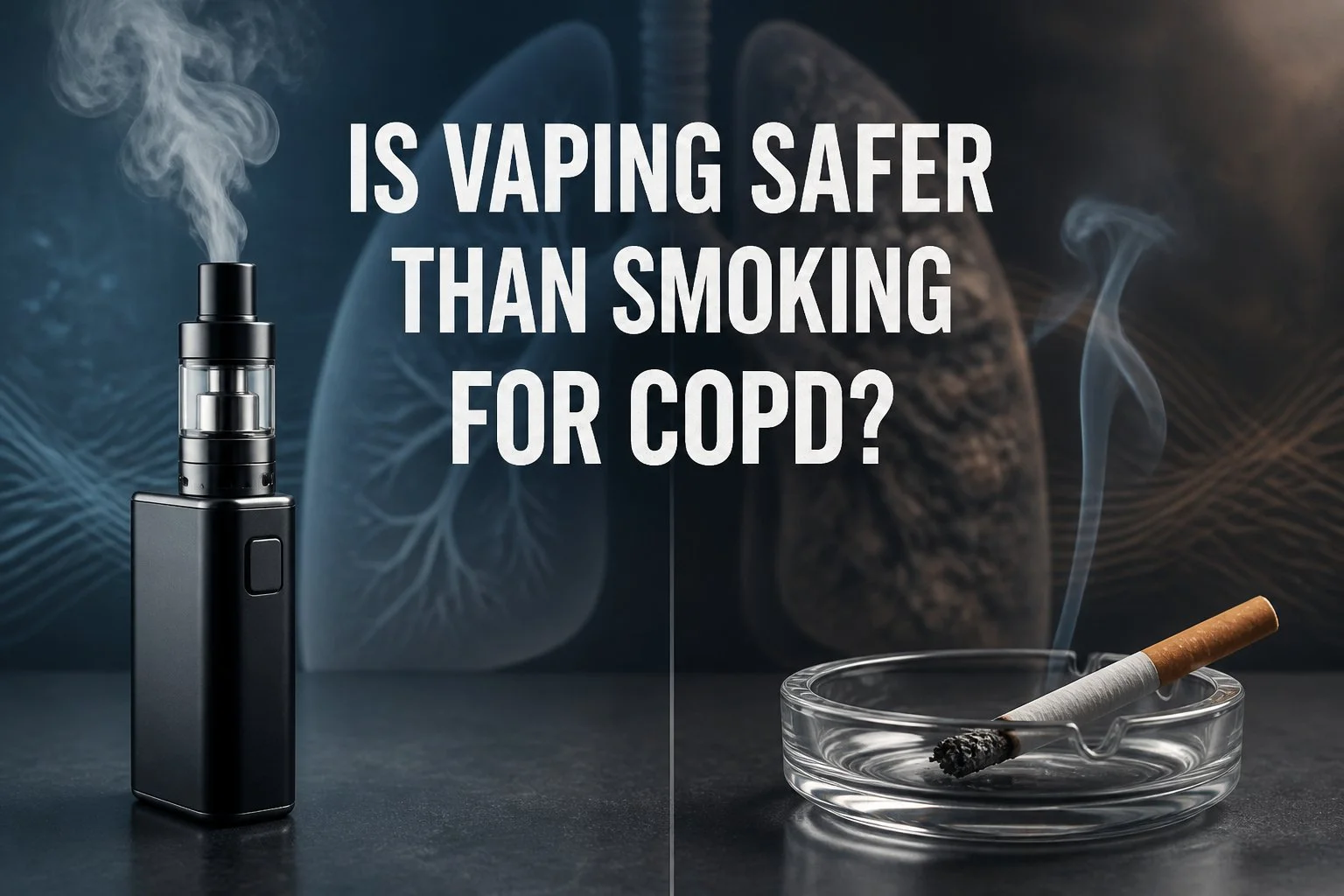
Is Vaping Safer Than Smoking for COPD?
Compared with traditional cigarettes, vaping likely exposes users to fewer harmful chemicals because there is no combustion process. Burning tobacco creates thousands of chemicals, including many known toxic substances and carcinogens.
When tobacco burns, it produces:
- Tar
- Carbon monoxide
- Thousands of combustion chemicals
- Numerous toxic particles that directly damage lung tissue
Vapes do not burn tobacco, which means they generally produce lower levels of many harmful compounds.
However, "less harmful than smoking" does not mean "risk-free."
This is one of the biggest misunderstandings I see in vape discussions.
A seatbelt reduces the risk of injury in a car accident, but nobody would say crashing into a wall is suddenly safe because you are wearing one.
The same principle applies here:
- Smoking cigarettes: highest known COPD risk
- Vaping: likely lower risk than smoking, but not harmless
- Not using nicotine products: lowest risk
The CDC and other public health organizations continue to state that e-cigarettes are not safe products, particularly for people who do not currently smoke.
Can Switching From Smoking to Vaping Reduce COPD Risk?
For adult smokers who cannot quit nicotine completely, switching completely from cigarettes to vaping may reduce exposure to many harmful chemicals.
The key word is: Completely.
Dual use—smoking cigarettes while also vaping—is extremely common.
Unfortunately, continuing to smoke even a few cigarettes per day can maintain significant COPD risk.
Many smokers think:
"I cut down from a pack a day to five cigarettes, so I've solved the problem."
Reducing cigarette consumption is better than smoking more, but the lungs do not measure risk with a simple calculator.
Even small amounts of cigarette smoke can continue triggering:
- Inflammation
- Oxidative stress
- Airway damage
For someone trying to protect their lungs, the ideal path is:
- Quit smoking completely
- Reduce nicotine dependence
- Eventually stop using nicotine products if possible
What Do Health Organizations Say About Vaping and COPD?
Different organizations approach vaping from slightly different perspectives, but there is broad agreement on several points:
1. CDC Position
The Centers for Disease Control and Prevention (CDC) states that e-cigarette aerosol is not harmless and can contain substances that are potentially harmful to the lungs.
The CDC also emphasizes that cigarette smoking remains the leading cause of COPD.
2. American Lung Association Position
The American Lung Association highlights that e-cigarettes can expose users to harmful chemicals and that the long-term health effects remain uncertain.
Their concern is mainly based on:
- Potential lung inflammation
- Chemical exposure
- Unknown long-term consequences
3. World Health Organization Position
The World Health Organization (WHO) has repeatedly warned that electronic nicotine products are not risk-free and that more research is needed to understand their long-term effects.
Who May Have a Higher Risk of Lung Problems From Vaping?
Not every vaper will experience the same effects.
Several factors may increase potential risk.
1. Long-Term Heavy Vaping
The longer and more frequently someone vapes, the greater their cumulative exposure.
A person who takes a few puffs occasionally is not exposed in the same way as someone who uses a high-nicotine disposable vape continuously throughout the day.
2. Existing Lung Conditions
People with conditions such as:
- Asthma
- Chronic bronchitis
- Previous lung infections
may be more sensitive to airway irritants.
Vaping may worsen coughing, wheezing, or breathing discomfort in some individuals.
3. Dual Use of Cigarettes and Vapes
As mentioned earlier, combining cigarettes and vaping may maintain significant respiratory risks.
Many studies struggle to separate vaping effects from smoking history because so many adult vapers are former or current smokers.
4. Young People
COPD usually develops later in life, but lung development continues into early adulthood.
Nicotine exposure during adolescence may affect brain development and could influence future health behaviors.
This is why health authorities strongly discourage vaping among young people and non-smokers.
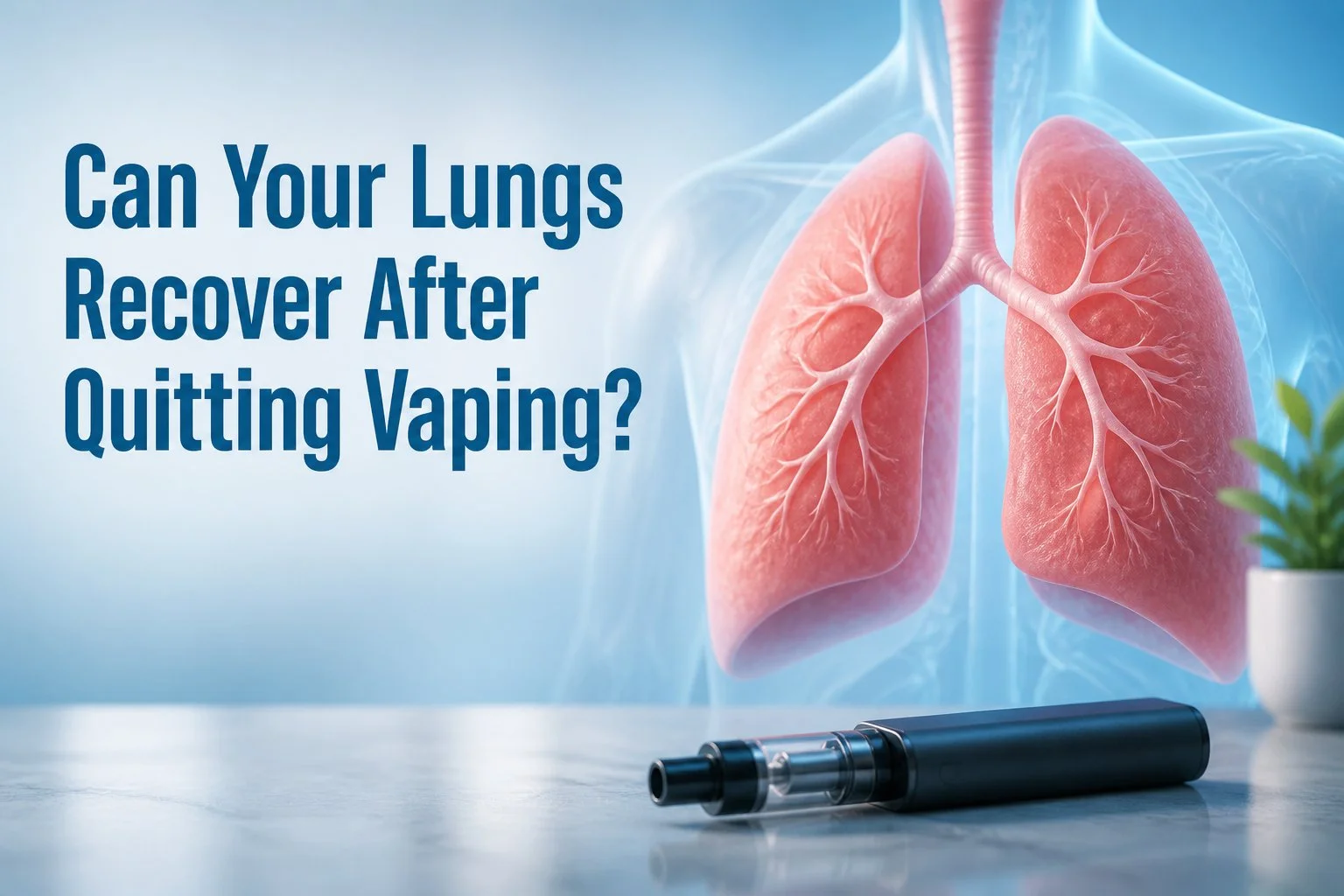
Can Your Lungs Recover After Quitting Vaping?
The body can repair itself after reducing or stopping exposure to harmful substances. The lungs have remarkable healing abilities.
After quitting vaping, some people report improvements such as:
- Less coughing
- Easier breathing
- Improved exercise tolerance
- Reduced throat irritation
However, the extent of recovery depends on factors including:
- How long someone has vaped
- Previous cigarette smoking history
- Existing lung damage
- Overall health
If someone already has COPD, quitting cannot completely reverse established structural damage, but stopping exposure can slow disease progression.
Signs Your Lungs May Not Be Happy With Your Vape
Your lungs are surprisingly good communicators.
They may not send a polite email saying:
"Dear human, please reconsider your daily habits."
Instead, they usually complain through symptoms.
Pay attention if you experience:
Persistent Cough: A cough that continues for weeks or months deserves attention.
Frequent Shortness of Breath: Feeling unusually breathless during normal activities can be a warning sign.
Wheezing: A whistling sound when breathing may indicate airway narrowing.
Chest Tightness: Repeated chest discomfort should not simply be ignored.
Frequent Respiratory Infections: Repeated bronchitis-like symptoms may indicate your airways are struggling.
If these symptoms appear, especially if they worsen over time, speaking with a healthcare professional is the sensible move.
Conclusion
Current evidence doesn't prove that vaping causes COPD, but it does suggest it may increase the risk of lung damage over time. If you don't smoke, don't start vaping. If you do smoke, switching completely to vaping may reduce harm—but quitting nicotine altogether remains the best choice for your lungs.
FAQs
1. Can vaping cause COPD?
Currently, there is no definitive proof that vaping directly causes COPD. However, studies show that vaping can increase airway inflammation, oxidative stress, and exposure to chemicals that may contribute to long-term lung damage. Researchers are continuing to investigate whether long-term vaping increases COPD risk.
2. Is vaping worse than smoking for COPD?
No. Cigarette smoking remains the biggest known cause of COPD because burning tobacco creates large amounts of toxic chemicals and carbon monoxide. Vaping generally exposes users to fewer harmful substances than smoking, but it is not risk-free.
3. Can vaping damage your lungs permanently?
Long-term effects are still being studied. Some research suggests vaping can cause inflammation and changes in lung cells. Whether these changes lead to permanent diseases such as COPD remains uncertain.
4. Can quitting vaping improve lung health?
Yes, stopping vaping can allow the body to recover from ongoing irritation. Many people experience improvements in coughing and breathing after quitting. Recovery depends on factors such as vaping history, smoking history, and existing lung conditions.
5. How long does it take vaping to cause COPD?
There is no confirmed timeline because researchers do not yet have enough decades-long data on vaping. COPD usually develops after years of repeated lung damage, which is why scientists continue monitoring long-term e-cigarette users.
References
[1] Centers for Disease Control and Prevention (CDC). Health Effects of E-Cigarettes
[2] American Lung Association. The Impact of E-Cigarettes on the Lung
[3] World Health Organization (WHO). Tobacco: E-cigarettes